Who Is TheyaVue For, and Who Should Ask First
TheyaVue is made for healthy adults 18 and over who want an eye-focused multivitamin.
If you already take a multivitamin, zinc or AREDS formula, use a blood thinner, or smoke now or did before, ask a clinician first. It does not replace an eye exam.
See the side effects page for the daily limits.
Who the label is written for
TheyaVue is written for one audience: healthy adults, 18 and over, who want an eye-focused multivitamin and are willing to read the panel that comes with it. The label says so directly: "For healthy adults 18 years and over only." Everything below is that one sentence, worked out case by case.
Fitting this description is not the same as needing this product, and nothing here treats an eye disease. National Eye Institute (NEI), 2025 and Federal et al., 2005 both make the same point from different directions: real eye supplements have a narrow, tested use, and marketing claims for eye products are a category regulators watch closely.
Who this product suits
Who this suits
- Adults 18 and over who already eat reasonably well and want a broad, eye-themed multivitamin on top of that, not instead of it.
- People who will actually take two capsules a day, 20-30 minutes before a meal, rather than one capsule taken twice as often as they remember.
- People comfortable with a label that measures 14 nutrients precisely and leaves 10 more inside one unmeasured blend, lutein and zeaxanthin among them.
- Anyone who will keep their regular eye exams on the same schedule regardless of what is in the bottle.
The age line on the label
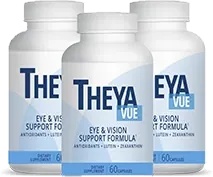
Adults 18 and over is not a suggestion; it is the line the label draws. For healthy adults 18 years and over only. Talk to a doctor before use if you take medicine or have a medical condition. Do not take more than the label says unless a clinician tells you to.
That single sentence rules out anyone under 18 on its own, and it puts the burden of the next question, medicine or condition, on a conversation with a clinician rather than on this page. What follows breaks that one sentence into the specific situations it is most likely to apply to.
Who should ask a clinician first
| Situation | Why it matters here |
|---|---|
| Already taking a multivitamin, a zinc supplement or an AREDS-style eye formula | Zinc, copper, vitamin C and vitamin E all stack across products. Thirty-two milligrams of zinc a day from this bottle alone is under the 40 mg adult limit, but adding another zinc-containing product on top can cross it. |
| Taking a blood thinner such as warfarin | Vitamin E, quercetin and grape seed extract all carry bleeding-related caution in the literature we reviewed National Institutes of Health, 2021, and none of the amounts inside the 481 mg blend are published, so the size of any interaction cannot be checked from the label alone. |
| Smokers and former smokers | This label's beta-carotene contribution is small, but Omenn et al., 1996 found high-dose beta-carotene raised lung cancer risk specifically in smokers and former smokers, which is exactly why AREDS2 dropped beta-carotene in favor of lutein and zeaxanthin. |
| Any other prescription medicine or diagnosed condition | The label asks for this conversation in general terms. A pharmacist or a clinician can check this panel against a specific prescription list in a way a product page cannot. |
None of these four rule TheyaVue out automatically. They mean the label's own instruction, "talk to a doctor before use," applies to that situation specifically, with a real reason attached rather than a blanket caution. The common thread is that none of the ten ingredients inside the 481 mg blend carries a published amount, so a clinician weighing a real interaction cannot check this label's dose against a known threshold the way they can for the fourteen fully itemized nutrients above it.
What to bring to that conversation
Your current medicine list
Every prescription and over-the-counter drug, including a blood thinner if you take one. A pharmacist can check zinc, vitamin E and the unmeasured blend against it faster than any product page.
Your current supplement list
Any multivitamin, eye formula or standalone zinc, copper or vitamin C product you already take. This is where stacking happens, usually by accident.
A copy of this panel
The fourteen nutrients with their own Daily Value, and the note that ten more ingredients share one 240.5 mg total with no individual amount. A photo of the back label works fine.
The two lines that already run close to a limit
Forty milligrams of niacin a day against a 35 mg supplemental upper limit, and 32 mg of zinc a day against a 40 mg adult ceiling. Both are worth naming out loud rather than assuming someone else already checked them.
Who should not take TheyaVue
- Anyone pregnant or breastfeeding. The label does not address this population one way or the other, and this page will not guess in its place. That silence is itself a reason to ask an obstetric provider before starting, rather than assuming the product was cleared for that situation.
- Anyone under 18. The label's caution line is explicit about this on its own, without exception for age or size.
- Anyone allergic to a listed ingredient, including the cellulose capsule shell, rice flour, magnesium stearate or silicon dioxide, or any of the ten items inside the proprietary blend, from bilberry to grape seed extract.
- Anyone looking for a treatment for macular degeneration, glaucoma, cataract, diabetic eye disease or dry eye. This is a support supplement. It is not any of those treatments, it does not replace a prescribed one, and it does not reduce the need for glasses, contacts or surgery.
If your vision has changed
Sudden blurring, flashes, floaters, eye pain or lost vision are reasons to see an eye doctor the same day. Starting or continuing any supplement does not answer that kind of change, and delaying an appointment to see if a capsule helps first is the wrong order of operations.
This applies whether the change happened last week or has been creeping in for months. A supplement bottle cannot diagnose a refractive error, a cataract or a retinal problem, and none of those conditions wait for a 30-day bottle to run its course. More on what a fair trial of any eye supplement actually looks like, and what it does not, is on the results timeline page.
Four questions before you order
Deciding whether to start
Fitting the "who this suits" description is the easy part; most healthy adults do. The more useful exercise is the second list: checking whether you are one of the specific situations the label itself flags, and having that conversation before the first capsule rather than after. Dosing details, once you have decided to start, are on the how-to-use page, and the full ingredient-by-ingredient breakdown is on the ingredients page. Questions about an order go to +1 (315) 724-2018.
Who It's For: common questions
Is TheyaVue safe for adults over 60?
The label sets the floor at 18 and over with no upper age limit stated. Older adults are more likely to already take other supplements or medicines, which makes the clinician conversation more relevant, not less.
Can I take TheyaVue with my regular multivitamin?
Ask a clinician first. Zinc, copper, vitamin C and vitamin E in this product can stack with a separate multivitamin, and 32 mg of zinc a day plus another supplement's zinc can approach or cross the 40 mg adult upper limit.
I'm on blood thinners. Can I take this?
Talk to your prescriber before you start. Vitamin E, quercetin and grape seed extract all carry bleeding-related caution in the literature, and none of their amounts inside the 481 mg blend are published.
I smoke. Does that rule TheyaVue out?
It does not rule it out, but it is worth mentioning to a clinician. High-dose beta-carotene raised lung cancer risk in smokers in large trials; this label's beta-carotene amount is small, and AREDS2 itself replaced beta-carotene with lutein and zeaxanthin for the same reason.
My vision has gotten blurrier lately. Should I try this first?
No. A recent change in vision calls for an eye exam, not a supplement trial. Sudden blurring, flashes, floaters, pain or vision loss mean seeing an eye doctor the same day.
Is this suitable for children or teenagers?
No. The label is written for healthy adults 18 and over only.
Can pregnant or breastfeeding people take TheyaVue?
The label does not address pregnancy or breastfeeding, so this page will not guess in its place. Ask an obstetric provider before starting any new supplement in that situation.
Does 'Doctor Developed' mean a doctor tested it on patients like me?
No. It is a marketing mark on the packaging. No clinician is named in any material we were given, so treat it as unverified rather than as personalized medical guidance.
Keep reading
How to use TheyaVue
Dosing, timing, a missed dose and why never to double up, spelled out step by step.
Read →A realistic results timeline
What a fair trial period looks like, and why the refund window closes before the research would.
Read →Side effects and interactions
Every caution on this label, with its source, in one place.
Read →Order TheyaVue from the authorized retailer
60 servings per bottle, 1 to 2 droppers a day. Kits of 2, 3 or 6 bottles run from $39 a bottle on the sales page, with a 60-day money-back guarantee. Questions first? Call +1 (315) 724-2018.