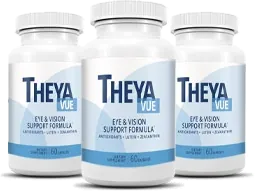
TheyaVue batch and CoA numbers, checked honestly
Lot THE-26/MY-1753 and CoA THE-1753-26-MY are draft references, not lab proof: no certificate, lab name or test result came with them. A real certificate of analysis names an accredited lab and reports measured potency, heavy metal and microbial results. Match a bottle to an order by calling +1 (315) 724-2018 with the order ID, and never use a bottle whose seal is broken or missing.
What these two codes are, and what they are not
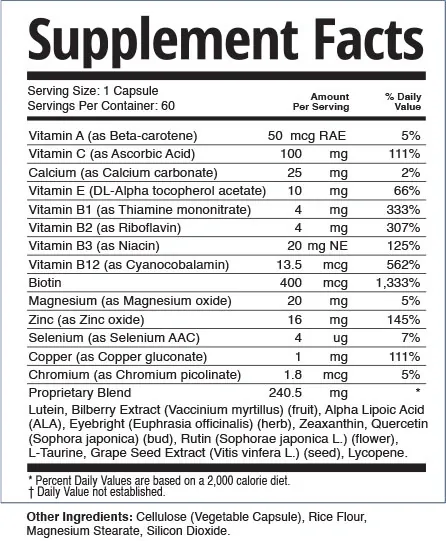
Two reference numbers came to us with the TheyaVue pack: a lot number, THE-26/MY-1753, and a certificate of analysis number, THE-1753-26-MY. We print both plainly here because a reader deserves to see them, and we say just as plainly that neither one is a lab result. A lot number is a batch label. A CoA number, on its own, is a reference to a document we have not been given a copy of. Until an actual certificate is produced, these two codes confirm nothing about what is inside a capsule.
What a real certificate of analysis contains
Nothing in the THE-26/MY-1753 / THE-1753-26-MY pair we hold contains any of this. A finished CoA would.
| A real certificate of analysis includes | Why it matters |
|---|---|
| The exact lot or batch number it tests | Ties the document to one specific production run, not the product line in general |
| The date the sample was tested | A certificate from a different production year tells you nothing about the bottle in your hand |
| The name of the testing lab, and its accreditation | An unnamed lab, or a lab with no accreditation listed, cannot be checked by anyone |
| A measured amount for each ingredient tested | Not just a pass or fail; a real potency assay reports a number and compares it to the label claim |
| Heavy metal screening results | Lead, arsenic, cadmium and mercury, each against a stated limit |
| Microbial screening results | Yeast, mold and bacterial counts, again against a stated limit |
| A signature or reference number a lab can confirm | Lets a buyer, a retailer or a journalist call the lab and verify the document is real |
How to read a lot code and a best-before code
A lot code and a best-before code are two different things, printed close together on most supplement bottles. The lot code identifies the manufacturing run: everyone who received a bottle from that run got the same code, whether they bought it last week or six months ago. The best-before or expiration code is a date, sometimes written as month and year, sometimes as a stamped number that decodes to a date.
TheyaVue's panel we were given does not show us a printed best-before code alongside the lot reference, which is one more gap worth checking against your own bottle rather than against this page. If your bottle shows a date, that date, not the lot code, is what tells you when the capsules inside are meant to be used by.
A lot code by itself is not a safety guarantee. It is a way to trace a bottle back to a specific run if a problem is ever reported about that run. That is a real, useful function. It is a different function from a lab test, and the two should not be confused just because they sit on the same panel.
Where this fits against everything else the panel does not say
The lot code and CoA reference are the closest thing to a factory fingerprint on this bottle, and they are also the limit of it. The panel we were given carries no manufacturer name, no distributor address and no country of manufacture, a gap the rest of this site flags rather than fills in. The lot reference is the one piece of production information attached to this bottle at all, which is exactly why it matters to read it correctly instead of assuming it means more than it does.
A shopper cannot call a factory that is never named. What a shopper can do is call the order desk, read the lot code on the bottle in hand, and ask a direct question about testing. That is a narrower path than a full public lab report, and it is the real one available here.
More on what is and is not printed on the panel itself is on the Supplement Facts page.
How to match your bottle to your order by phone
Matching a lot code confirms which run shipped to you. It does not, by itself, confirm what a lab found in that run.
Find your order ID first
It is in your order confirmation email. The order desk works from the order ID, not from the lot code on your bottle, so have it ready before you dial.Call +1 (315) 724-2018
This is the order desk: orders, tracking, changes and refunds. It can match your order to what shipped and confirm the batch that went out with it.Read the lot code on your bottle out loud
Have the bottle in hand. The desk can tell you whether that code lines up with your order, which is a different question from whether a lab has tested it.Ask directly if you want more than a match
If you want lab documentation beyond a batch match, ask for it by name. We have not been given one to publish, and a direct question to the desk is the more reliable path than searching for it online.
What to do if a bottle looks wrong or the seal is broken
Keep out of reach of children. do not use if the safety seal is damaged or missing. That instruction is printed on the label, and it stands ahead of anything on this page. A broken or missing seal means you cannot be sure nothing was added, removed or exposed to air and moisture since the bottle was sealed at the plant.
- Seal broken, missing, or looks tampered with: stop, do not take a capsule, and call the order desk before opening it further.
- Capsules look a different color or texture from what you expected, or the count looks noticeably short: photograph the bottle before you touch the capsules, then call.
- The lot code on the bottle does not match what the order desk has on file for your order: ask the desk to look into it rather than assuming either side is wrong.
- Anything about the bottle worries you and you have already taken a capsule: that is a question for a doctor or a poison control line, not something to wait out.
In every one of these cases, the order desk on +1 (315) 724-2018 is the right first call, with your order ID ready. A wrong or damaged bottle is handled through the same guarantee process as any other return; the full steps are on the refund policy page.
The gap between a reference code and a lab report
| Question | What THE-26/MY-1753 and THE-1753-26-MY answer | What only a real lab report answers |
|---|---|---|
| Which production run made my bottle? | Yes, as a reference code | Not applicable |
| Was that run tested for heavy metals? | Not shown to us | Yes, with a stated result per metal |
| Was that run tested for microbial contamination? | Not shown to us | Yes, with a stated result |
| Does the blend contain the potency the label implies? | Not shown to us | Yes, as a measured amount per ingredient |
| Can I call a named lab to confirm the document? | No lab is named in the material we hold | Yes, on a genuine certificate |
Batch Verify: common questions
Is THE-26/MY-1753 a real lab-tested batch number?
It is a lot reference we were given. We have not been given a certificate of analysis to go with it, so we cannot call it lab-verified.
What does the CoA number THE-1753-26-MY prove?
On its own, nothing we can verify. A CoA number is a pointer to a document; without that document in hand, the number alone is not proof of testing.
How do I check my bottle's lot code?
Read the code printed on your bottle and call +1 (315) 724-2018 with your order ID. The desk can confirm whether it matches what shipped to you.
What is the difference between a lot code and a best-before date?
A lot code identifies the production run. A best-before or expiration date, printed separately, tells you when to use the capsules by.
What should I do if my bottle's seal is broken?
Do not take a capsule from it. Photograph the bottle and call the order desk before opening it further.
Can I get an actual certificate of analysis for my bottle?
Ask the order desk directly. We have not been given one to publish on this site, and a direct request is the more reliable path than searching for it.
Does a matching lot code mean the product is safe?
It means your bottle came from the run it claims to. It says nothing about heavy metal, microbial or potency testing, which only a real lab report can answer.
Why does this page keep saying 'draft reference' instead of just 'batch number'?
Because a batch number implies it traces to a finished, checkable document. Ours traces only as far as the two codes themselves, so we describe them as what they are.
Keep reading
What TheyaVue's seals do and don't verify
FDA registration, GMP and the other marks on the bottle, read plainly.
Read →The refund process, step by step
What to do next if a bottle you received is damaged or wrong.
Read →The 60-day money-back guarantee
How to claim it by phone, and what it does and doesn't cover.
Read →Order TheyaVue from the authorized retailer
60 servings per bottle, 1 to 2 droppers a day. Kits of 2, 3 or 6 bottles run from $39 a bottle on the sales page, with a 60-day money-back guarantee. Questions first? Call +1 (315) 724-2018.