TheyaVue Side Effects: 7 Safety Checks on Niacin, Zinc and Biotin
TheyaVue side effects are not listed by name on the label, and nobody can call a supplement safe for everyone. Three numbers are worth a doctor's word: niacin at 40 mg NE a day is above the 35 mg supplemental limit; biotin can skew some lab tests; and zinc at 32 mg a day uses most of the 40 mg limit. The blend amounts are not published.
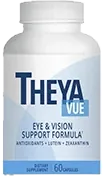
Is TheyaVue safe to take?
People type "is TheyaVue safe" and "TheyaVue side effects" for a good reason. The label looks mild, yet a few numbers on it sit close to published limits. This page walks through seven checks, one at a time, so you can bring a clear list to a doctor or pharmacist.
We are not clinicians who treat patients, and this page does not replace one. We read the label and compare it with public fact sheets. The key trick is simple. The panel prints amounts for one capsule, and you take two a day. Double each line first, then check it against a limit.
- Label audience: healthy adults 18 and over only. Talk to a doctor first if you take medicine or have a medical condition.
- Niacin: 40 mg NE a day at the label dose. The upper limit for supplemental niacin is 35 mg, and the form of niacin is not stated.
- Zinc: 32 mg a day. The adult upper limit from all sources is 40 mg.
- Biotin: 800 mcg a day. It can interfere with some lab tests.
- Blend: ten ingredients share 481 mg a day, with no single amount published.
If you decide to look at the product, the order page shows the kit prices and the 60-day return terms before you pay anything.
See today's price and guaranteeMytheyavue earns money when you buy through the order links on this site.
TheyaVue is a dietary supplement. It is not FDA approved, and no supplement is. It does not diagnose, treat, cure or prevent any disease. This page is general information and not medical advice. Ask your doctor or pharmacist about your own medicines. Sudden blurring, flashes, floaters, eye pain or vision loss need an eye doctor the same day.
Does the label say who it is for?
Yes, and it is a narrow group. The label says the product is for healthy adults 18 years and over only. It asks you to talk to a doctor before use if you take medicine or have a medical condition. It also says not to take more than the label says unless a clinician tells you to.
The label does not speak to pregnancy or breastfeeding. We will not guess for it. If either applies to you, ask an obstetric provider before you start. Children and teens are outside the label's audience.
Is the niacin amount above a public limit?
At two capsules a day the niacin comes to 40 mg NE. The NIH Office of Dietary Supplements sets the upper limit for supplemental niacin at 35 mg a day. The limit is based on the flushing reaction niacin can cause. So the label dose is 5 mg over it.
The panel does not say which form of niacin it uses. That matters. Nicotinic acid causes flushing directly, while nicotinamide generally does not. Without the form, nobody can say how likely flushing is. Anyone with liver disease, gout or a stomach ulcer should raise this line with a doctor first.
Over the limit does not mean harmful for everyone. It means "ask first".
Can the biotin change a blood test?
Biotin is 400 mcg a capsule and 800 mcg a day. Extra biotin can interfere with lab tests that use a biotin-based step, including troponin and thyroid panels. The FDA has published a safety communication about biotin and troponin tests. NIH describes much larger doses, around 10 mg a day and up, as the range where trouble has mostly been reported.
So 800 mcg is far below the worst cases. Still, the habit is cheap and useful. Tell any clinic that draws your blood that you take a biotin-containing supplement. Do not stop it blindly. Let the clinic decide how to handle the test.
How close is the zinc to its ceiling?
Zinc is 16 mg a capsule and 32 mg a day, as zinc oxide. The adult upper limit from all sources is 40 mg. That leaves 8 mg of room for everything else you take. A multivitamin, a cold lozenge or a separate zinc pill can use that room fast.
The label pairs the zinc with 2 mg of copper a day. That is a sensible match. High zinc intake of 50 mg a day or more, mostly from supplements, can lower copper absorption. The pairing is a safeguard, but it does not cancel the need to add up your zinc.
- List every pill you take, with the zinc and copper on each label.
- Add the zinc to 32 mg and see where the total lands.
- If it nears 40 mg, ask a pharmacist before you stack.
Does the beta-carotene matter if you smoke?
The vitamin A on this label comes from beta-carotene, at 50 mcg RAE a capsule. That is a trace. Large trials found more lung cancer in smokers who took 20 to 30 mg a day of beta-carotene. Those doses are far above this label. The harm showed up in smokers and former smokers, not in non-smokers.
This product carries no known cancer signal at its own dose. The honest caution is about stacking. If you smoke or used to, tell your clinician about this product before you add a separate high-dose beta-carotene pill.
What about vitamin E and bleeding?
The vitamin E here is about 20 mg a day, roughly 44 IU, in the synthetic DL-alpha form. NIH sets the adult upper limit at 1,000 mg and links very large doses with bleeding concerns. The dose on this label is far below that.
The open question is the blend. Quercetin and grape seed extract both carry their own bleeding notes in the literature, and their amounts are not published. If you take a blood thinner such as warfarin, or you have surgery planned, show the whole panel to your prescriber instead of reasoning from the vitamin E line alone.
Does the hidden blend make side effects hard to judge?
Yes. Ten ingredients share one 481 mg daily total. For the fourteen named nutrients you can check every amount. For the ten blend items you cannot. Alpha lipoic acid can affect blood sugar control. Bilberry is sometimes flagged for a theoretical extra effect with blood-thinning or blood-sugar medicine. Eyebright tinctures at high doses have been linked with nausea and other effects.
We cannot say whether any of these sits at a dose that matters, because the label does not say. That uncertainty is itself the safety point.
| Item | Per day on this label | Public marker |
|---|---|---|
| Niacin | 40 mg NE | 35 mg upper limit for supplemental niacin |
| Zinc | 32 mg | 40 mg adult upper limit, all sources |
| Biotin | 800 mcg | Can interfere with troponin and thyroid tests |
| Vitamin E | About 20 mg (about 44 IU) | 1,000 mg adult upper limit |
| Blend | 481 mg, ten ingredients | No single amount published |
Frequently asked questions
Does TheyaVue have side effects?
The label lists none by name. Our checks flag niacin above its 35 mg supplemental limit, biotin lab-test interference and a zinc total that uses most of the 40 mg limit. Ask a doctor about your own case.
Is the niacin in TheyaVue too high?
At 40 mg NE a day it is above the 35 mg upper limit for supplemental niacin, and the form is not stated. That is a reason to ask a clinician first, not an automatic danger.
Should I tell my doctor I take biotin?
Yes. Biotin can skew some lab tests, including troponin and thyroid panels. Tell any clinic that draws your blood, and do not stop it without asking.
Can I take TheyaVue with another zinc supplement?
Be careful. The label already gives 32 mg of zinc a day and the adult upper limit from all sources is 40 mg. Add up every product first.
Is TheyaVue safe if I take a blood thinner?
Ask your prescriber first. Vitamin E, quercetin and grape seed extract carry bleeding notes, and the blend amounts are not published.
What eye symptoms mean I should see a doctor today?
Sudden blurring, flashes of light, new floaters, eye pain or any sudden loss of vision. See an eye doctor the same day. Do not wait to see if a supplement helps.
Which sources back this page?
- NIH Office of Dietary Supplements (2022). Niacin fact sheet.
- NIH Office of Dietary Supplements (2022). Biotin fact sheet.
- U.S. Food and Drug Administration (2022). Biotin Interference with Troponin Lab Tests.
- NIH Office of Dietary Supplements (2026). Zinc fact sheet.
- NIH Office of Dietary Supplements (2021). Vitamin E fact sheet.
- NIH Office of Dietary Supplements (2025). Vitamin A and Carotenoids fact sheet.
- Omenn GS et al. (1996). Effects of a Combination of Beta Carotene and Vitamin A on Lung Cancer and Cardiovascular Disease. New England Journal of Medicine.
- Andres S et al. (2018). Safety Aspects of the Use of Quercetin as a Dietary Supplement. Molecular Nutrition & Food Research.
- Haritoglou C et al. (2011). Alpha-Lipoic Acid for the Prevention of Diabetic Macular Edema. Ophthalmologica.
Our view
Our view is cautious but fair. The label asks for healthy adults only, and most lines sit well under public limits. Three do not sit comfortably: niacin is over, zinc is close, and biotin needs a heads-up to your lab. None of them is a reason to panic. All of them are reasons to talk to a professional who has your full medicine list.
The hidden blend is the larger issue. When ten ingredients share one number, a pharmacist cannot check an interaction the way they can for a plain vitamin. If you take daily medicine, bring a photo of the back label to your next visit.
If you go ahead, take it as directed and no more. Keep your eye exams on schedule, and use the 60-day return window if anything about it sits wrong with you.
Safety first, then price. When you are ready, the order page shows the kit totals and the return steps.
See today's price and guaranteeMytheyavue earns money when you buy through the order links on this site.