How Long Does TheyaVue Take to Work? 5 Steps to Track It
No week or month is promised for TheyaVue. Week one shows nothing measurable. The macular pigment research behind lutein and zeaxanthin mostly ran three to six months, and this label does not publish either amount. The refund window is 60 days. Only an eye exam can measure a change.
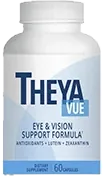
How long does TheyaVue take to work?
It is the first question many buyers ask: how long does TheyaVue take to work, and when will I see results? Fair question. The honest answer is that nobody can promise a date, and the material behind this product says why.
This page does not hand you a calendar of wins. It hands you a way to track your own case in five steps, so that you can decide what you saw with some care. We leave out before-and-after photos, because none are published and because a photo cannot show what a retina is doing.
Think of it as the opposite of a miracle timeline. It is a plain plan for an uncertain question.
- The label does not promise any result or any week for a result.
- A 2021 meta-analysis found changes in macular pigment mostly over three to six months, and the size of the change depended on the dose.
- Lutein and zeaxanthin amounts are not published on the TheyaVue label.
- The refund window is 60 days from purchase on every kit.
- Sudden blurring, flashes, floaters, eye pain or lost vision mean an eye doctor the same day.
If you want to see the refund window beside the kit sizes before you pick one, the order page shows them together.
See today's price and guaranteeMytheyavue earns money when you buy through the order links on this site.
TheyaVue is a dietary supplement, not a drug, and not FDA approved. It is not a treatment for any eye disease and does not restore eyesight. A change in your sight is a reason to book an eye exam, not a reason to wait for a bottle to take effect.
Step 1: What would "working" mean for you?
Pick one answer before you open the bottle. Some people mean sharper print. Some mean less tired eyes at a screen. Some mean a steady exam result. Each has a different way to be measured, and some cannot be measured by a supplement at all.
The bottle claims support, not an outcome. It says Eye & Vision Support Formula. It does not say your sight will sharpen, and the label makes no claim about eye strain, dryness or night driving.
A written goal keeps you honest. "I want to keep my regular exam on schedule and take two capsules a day" is a goal you can meet. "I want my eyes to feel better by week two" is a goal that a feeling can fake.
Step 2: What happens in week one?
Nothing you can measure. No supplement changes how a retina works in seven days, and the studies behind the ingredients ran for months. What week one does show is whether the routine fits your day.
The routine is two capsules, each 20 to 30 minutes before a meal, with an 8 oz glass of water. Notice early whether you remember the second capsule, since the label asks for both.
Waiting for a sign in week one means watching the wrong dial. The best use of week one is to confirm you can take it as printed.
Step 3: How long do the studies run?
Lutein and zeaxanthin are the two carotenoids the front of the bottle advertises. A 2021 review that pooled 46 studies found that the pigment in the macula changed over roughly three to six months. The size of the change depended on the dose.
| Question | What the research found |
|---|---|
| How fast does macular pigment change? | Mostly over three to six months, not days or weeks |
| Does the dose matter? | Intakes of 20 mg a day or more moved the pigment more than 5-20 mg; below 5 mg showed no significant change |
| Does a pigment change mean sharper sight? | No trial equates the two; it is a tissue measure, not a vision test |
| What does this label publish? | No lutein or zeaxanthin amount, since both sit inside the 240.5 mg blend |
The AREDS2 trial ran for about five years. It enrolled people who already had intermediate or advanced macular degeneration, and it measured how fast the disease progressed. It did not measure sharper vision, and it showed no benefit for people with early or no disease.
So the clock that fits the research is months for a tissue change and years for disease progression. A date inside a few weeks does not fit either.
Step 4: How do you track it without fooling yourself?
Write down your starting point before the first capsule. Keep it short and dated. It will matter more than any feeling six weeks from now.
Note your baseline
Write down your glasses or contact lens prescription with its date, plus whatever your last eye exam said.
Log the routine
Mark each day you took two capsules. A simple tick on a calendar is enough.
Log the cautions
Note any flushing, stomach upset or other change, since the niacin line sits above its limit. Mention it to a clinician.
Book the next exam
Put your regular eye exam on the calendar before you start. It runs on its own schedule, not the bottle's.
A diary is not proof for anyone else. It is still better than a memory, which smooths out the weeks in between and loves a good story.
Step 5: When do you decide, and what does the refund window allow?
The guarantee runs 60 days from purchase. Two bottles at the label dose cover that window exactly. The research clock mostly needs 90 to 180 days. So the refund window closes before the research would report a change, whatever kit you pick.
| Kit | Days of capsules | Days inside the window |
|---|---|---|
| 1 bottle | 30 | 30 of 30, all of it |
| 3 bottles | 90 | 60 of 90, about two thirds |
| 6 bottles | 180 | 60 of 180, one third |
That is a fact about timing, not a verdict on the ingredients. It leaves you with a choice. You can decide at day 60 on how the routine felt and what your doctor said. Or you can buy a big kit, carry on past the window and accept that a refund is no longer on offer.
If you are unsure, the smaller kits keep the choice open. Our refund guide shows how to use the window if you decide to stop.
Can you find TheyaVue before and after photos or results?
None are published in the material we hold, and we show none. A photo of a face or a bottle cannot show macular pigment, eye pressure or the state of a retina. Those are read with instruments in an exam room.
Be careful with any before-and-after image attached to an eye supplement. If it claims sharper sight, ask who took it, when, with which test and under whose care. If no one can say, it is a picture.
Does every ingredient have a timeline?
No. Bilberry is a good example. A systematic review of placebo-controlled trials found no rigorous evidence that bilberry improves normal night vision. There is no window, short or long, in which that claim is expected to appear, because controlled research never found the effect.
Lutein and zeaxanthin do have a published research window that makes sense. This label simply does not let you check its own dose against it.
Frequently asked questions
How long does TheyaVue take to work?
No timeline is promised. Research on lutein and zeaxanthin mostly ran three to six months, and TheyaVue does not publish either amount.
Will I notice a difference in the first week?
No effect is expected or measurable in week one. The first week shows whether you can keep to two capsules a day before meals.
Does the 60-day guarantee cover the research timeline?
No. Sixty days closes before the three-to-six-month window most macular pigment studies used, on every kit size.
Are there TheyaVue results or before and after photos?
None are published, and a photo cannot show what a retina is doing. An eye exam is the only real measurement.
What should I track while taking it?
Your starting prescription, the days you took two capsules, any side effects, and the date of your next eye exam.
What if my vision changes suddenly?
See an eye doctor the same day. Sudden blurring, flashes, floaters, pain or lost vision are never something to wait out with a supplement.
Which sources back this page?
- Wilson LM et al. (2021). The Effect of Lutein/Zeaxanthin Intake on Human Macular Pigment Optical Density: A Systematic Review and Meta-Analysis. Advances in Nutrition.
- AREDS2 Research Group (2013). Lutein + Zeaxanthin and Omega-3 Fatty Acids for Age-Related Macular Degeneration: the AREDS2 Randomized Clinical Trial. JAMA.
- Canter PH, Ernst E (2004). Anthocyanosides of Vaccinium myrtillus (Bilberry) for Night Vision: A Systematic Review of Placebo-Controlled Trials. Survey of Ophthalmology.
- A realistic TheyaVue results timeline (this site)
- TheyaVue 60-day guarantee page (this site)
- How to use TheyaVue (this site)
Our view
A product that promises a week or a month for sharper sight is promising more than the research can back. TheyaVue's own label does not make that promise, and we will not make it for the label.
Our advice is to treat the first 60 days as a routine check and the first eye exam after that as the real test. If you want the research to have a fair chance, talk with your doctor about a longer trial, and do not let a feeling decide.
A commission follows orders placed through our links. A timeline that sold harder would earn us more, and it would be wrong.
If you would like to plan the window before you order, the order page shows each kit's size beside the 60-day terms.
See today's price and guaranteeMytheyavue earns money when you buy through the order links on this site.